Kyoto and Osaka, Japan
September is Japan's open secret: the same Kyoto everyone wants, without the autumn-foliage crowds. 26–30°C by day, clear skies, and temples at half their usual visitor count. Tokyo's September Grand Sumo tournament adds Japan's most singular sporting event. For the couple who wants the real Japan before the crowds arrive.
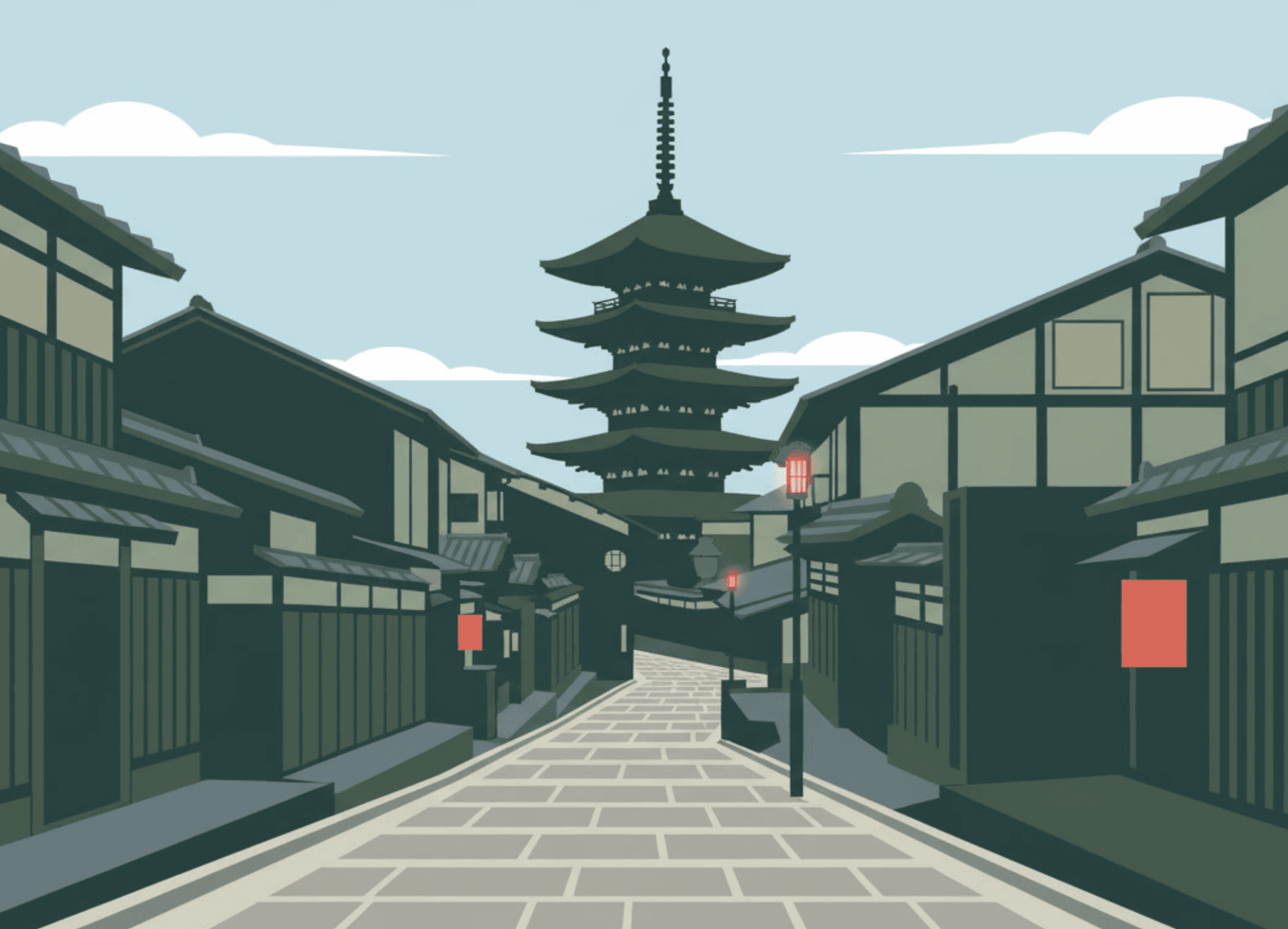
Gion's most praised boutique hotel — the historic geisha district — with "absolutely stunning" the single most repeated phrase in English and Spanish reviews from the past 12 months. Bright, spacious rooms in contemporary Japanese design, free in-room drinks and snacks, concierge service that got a taxi through pouring rain when Uber never showed, and a location that puts Kiyomizu-dera temple 15 minutes away on foot. For the couple who wants Gion's most complete hotel: this is it. Estimated price: €200–380/night.
✦Gion's most complete boutique hotelA ryokan with an onsen (hot spring bath) in the heart of Gion, 500 meters from Gion-Shijo Station. Rooms with tatami mats and futons, a public bath with a gender-separated onsen, and the most authentic ryokan experience available in Kyoto's most historic district. Reviews single out the onsen as the best part of every day — walking back from a temple at night and slipping into the hot bath before dinner is the ritual no Western hotel can replicate. Estimated price: €150–280/night.
✦Gion's most authentic onsen, every nightGion's most authentic, highest-rated ryokan: a 9.7 rating on Booking, 9.8 for location. An older couple has run it for decades — he poured the tea on our first visit and sketched a map to the bathroom for newly arrived guests. Tatami floors, a shared Japanese bath, a yukata robe included, and Hanamikoji — Kyoto's most photogenic street — literally at the front door. The ryokan that shows up most often in repeat travelers' "what I'd do differently in Japan" lists. Estimated price: €120–200/night.
✦Gion's highest-rated ryokan: 9.7 on BookingKyoto's most recommended tea ceremony: in a traditional tea house with a private garden steps from Kiyomizu-dera temple, with garden views throughout the 45-minute ceremony. The tea master explains wabi-sabi — the philosophy of deliberate imperfection — while preparing matcha through a 400-year-old ritual. The best single-format introduction to Japanese culture available: calm, specific, and completely authentic.
Osaka's top-rated food tour for seven consecutive years. Shinsekai — the city's most authentic and least touristy neighborhood — with five local stops: kushikatsu (fried skewers in sauce), takoyaki (octopus balls), karaage, oden, and a full meal at a neighborhood izakaya. 15 dishes and 3 drinks included over 3 hours. The guide speaks fluent English, and the neighborhood operates exclusively in Japanese — which is exactly the point.
The alternative tour from Hungry Osaka Tours — same company, different format: five different venues in Shinsekai, authentic local cooking with no adjustments for the Western palate, and cultural context for every dish explained by a guide who lives in the neighborhood. For the couple who wants to repeat Osaka's food-tour experience with a different operator, or on a date when the main tour is sold out.
Kyoto was Japan's imperial capital for more than 1,000 years — from 794 to 1869, when the government moved to Tokyo. During World War II, Kyoto was removed from the list of American atomic bomb targets, partly due to the objections of Secretary of War Henry Stimson, who had visited the city on his honeymoon in 1926. The decision saved 17 UNESCO World Heritage sites, 2,000 temples and shrines, and the most intact architecture of historic Japan.
Turn this guide into a personalized AI itinerary — exact dates, travelers, and budget for your trip in 60 seconds.
Plan my trip →The most direct flight from CDMX is CDMX–Tokyo (Narita or Haneda), connecting through Los Angeles, Vancouver, or Dallas. From Tokyo, the Nozomi Shinkansen reaches Kyoto in 2 hours 15 minutes (roughly $130–160 USD). Alternative: fly direct to Osaka (Kansai, KIX), connecting through an Asian hub (Seoul, Taipei, Hong Kong).
For 8 days in Kyoto and Osaka with a Nara day trip and an arrival Shinkansen, the national JR Pass isn't necessarily the better financial option — run the numbers on your planned routes before buying it. The rechargeable ICOCA card covers the subway and local trains across the whole Kansai region and is more efficient for shorter stays.
Subway, bus, and on foot. Kyoto has a bus grid that covers every major temple. A rental bike ($8–12 USD/day) is the most lagom option for the couple who wants to cover the Philosopher's Path or Arashiyama without working around a schedule.
28–32°C in Kyoto and Osaka — hot but manageable, especially in the mornings. Kyoto's temples before 9am are practically empty. Humidity is the factor that matters most: light, breathable fabrics, not the cotton that seems like the obvious choice.